

A tooth that suddenly changes color or stops hurting after days of discomfort can raise concern. One of the most common questions that follows is whether a dead tooth can heal on its own. It is understandable to hope the problem will resolve naturally, especially if the pain fades.
The reality is that once the inner tissue of a tooth loses its vitality, it cannot regenerate. However, that does not automatically mean the tooth must be removed. With proper diagnosis and treatment, many affected teeth can be preserved and restored.
At Aspen Hill General & Cosmetic Dentistry, serving the Silver Spring community and nearby Montgomery County neighborhoods, Dr. Goorah, Dr. McLaughlin, and Dr. Nguyen routinely evaluate teeth affected by trauma and advanced decay. Early attention often makes treatment more predictable and conservative.
What Does It Mean When a Tooth “Dies”?
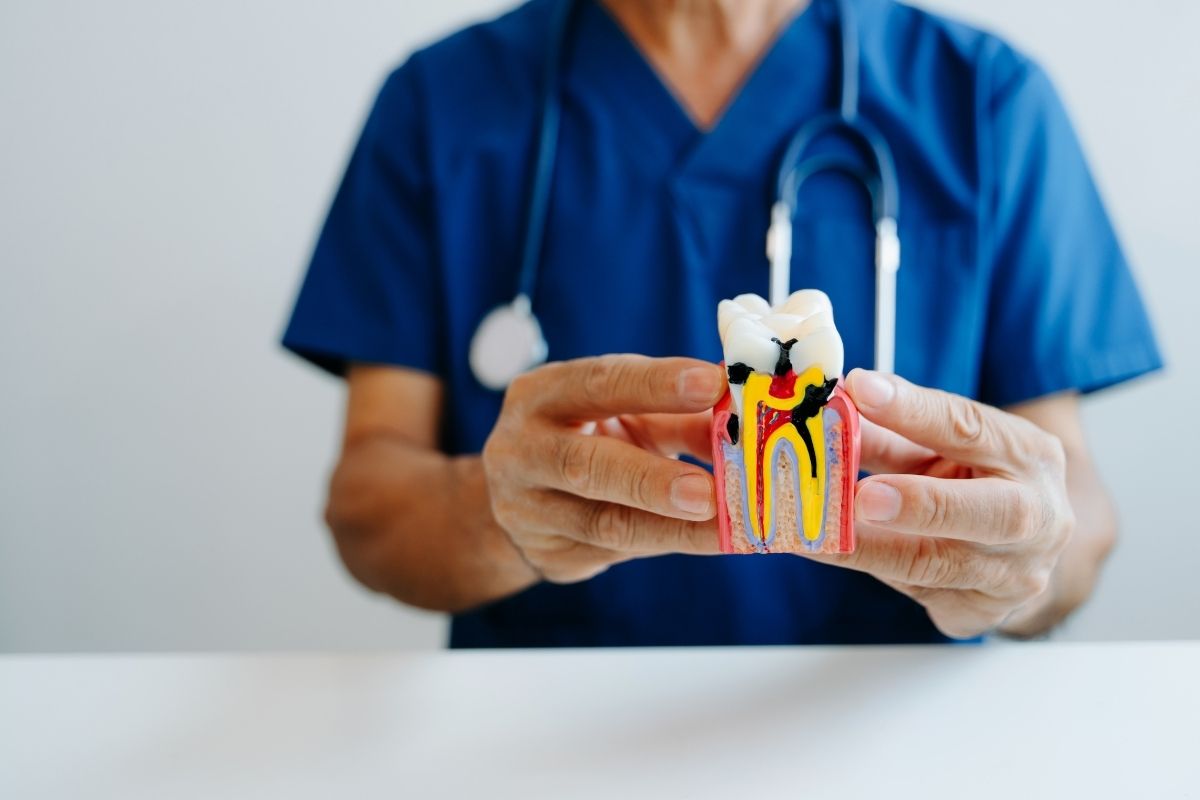
Inside each tooth is soft tissue known as pulp. This tissue contains nerves, connective fibers, and blood vessels. It supports development and helps the tooth respond to temperature and pressure.
When the pulp becomes severely inflamed or infected, the blood supply can be disrupted. This may occur due to untreated cavities, cracks, repeated dental procedures, or an injury. Without circulation, the tissue breaks down. At that point, the tooth becomes non-vital.
Unlike skin or bone, dental pulp does not have the ability to repair itself after it has died. The outer enamel and dentin may still be intact, but the internal structure is no longer healthy.
Can a Dead Tooth Heal Naturally?
A dead tooth cannot heal on its own. Once the pulp tissue has lost its blood supply, there is no mechanism for regeneration. Even if symptoms lessen, the underlying issue remains.
In some situations, discomfort decreases because the nerve tissue inside the tooth has completely broken down. While that may feel like an improvement, bacteria can still be present within the root canal system. If untreated, the infection may spread to the surrounding bone.
There are no home remedies or medications that can restore vitality to a non-vital tooth. Antibiotics may temporarily reduce swelling in certain cases, but they do not remove infected tissue from inside the tooth. Definitive care requires professional treatment.
Common Signs of a Non Vital Tooth
Symptoms vary depending on the extent of damage and whether the infection has spread. Some changes are subtle, while others are more noticeable.
- Tooth discoloration, often gray, brown, or dark yellow
- Persistent throbbing or aching
- Sensitivity when biting or chewing
- Swelling in the gums near the affected tooth
- A small pimple on the gum that may drain fluid
- Pain that suddenly stops after being intense
Discoloration is often one of the first visible indicators. As pulp tissue breaks down, internal staining can occur, leading to tooth darkening over time.
In our Silver Spring office, clinical testing helps determine whether the pulp remains healthy or has lost vitality.
Why Pain Sometimes Disappears
When inflammation affects the pulp, pressure builds inside the tooth. This can cause significant discomfort. If the nerve tissue dies completely, it can no longer send pain signals to the brain. The absence of pain does not necessarily mean the infection has resolved.
In some cases, infection continues to develop silently. Over time, it may lead to an abscess, bone changes, or swelling. That is why evaluation is important even if symptoms improve.
Treatment Options to Preserve the Tooth
Treatment depends on the extent of structural damage and whether surrounding tissues are involved. The goal at our office is always to maintain natural teeth whenever possible.
Root Canal Therapy
This is the most common solution for a dead tooth. During the procedure:
- The infected or necrotic pulp is removed.
- The root canals are carefully cleaned and disinfected.
- The canals are sealed to prevent reinfection.
Modern techniques and local anesthesia make this procedure far more comfortable than many expect. Most people compare the experience to receiving a filling. After root canal therapy, a crown is often recommended to reinforce the tooth.
Dental Crown
A crown restores the shape, strength, and function of a tooth. Teeth that have undergone pulp removal can become more brittle over time. A well-fitted crown protects the structure and allows normal chewing.
Extraction
If the tooth is severely fractured or the surrounding bone has been significantly affected, removal may be necessary. Replacement options such as dental implants or bridges can restore appearance and function.
Our dentists carefully review imaging and discuss findings before recommending any procedure. Treatment decisions are based on clinical evidence and overall oral stability.
What Happens If It Is Left Untreated?
Ignoring a non-vital tooth can lead to complications that extend beyond the tooth itself. Possible outcomes include:
- Formation of a dental abscess
- Bone loss around the root
- Swelling of the face or jaw
- Spread of infection to nearby teeth
Although serious systemic complications are uncommon, dental infections should not be underestimated. Addressing the issue early often yields a simpler solution.
How Diagnosis Is Made
Accurate diagnosis involves more than observing discoloration. At our office, evaluation may include:
- Examine the root structure and the surrounding bone
- Vitality testing to assess nerve response
- Examination for cracks or deep decay
- Review of dental and trauma history
This comprehensive approach allows for precise identification of the problem. Our team serves individuals and families throughout the Silver Spring area and neighboring communities, providing careful assessments rooted in experience and continuing education. To talk with our team, call us at: (301) 460-1212.
Preventing Pulp Damage
While not every situation can be prevented, certain habits reduce the risk of pulp injury:
- Routine dental exams and cleanings
- Early treatment of cavities
- Wearing a mouthguard during sports
- Avoiding chewing hard objects such as ice
- Maintaining consistent brushing and flossing habits
Regular examinations allow small concerns to be identified before they progress deeper into the tooth.
When to Seek Professional Evaluation
Evaluation is recommended if there is:
- Tooth discoloration
- Persistent discomfort
- Swelling near the gums
- A history of trauma to the mouth
- Sudden relief after severe tooth pain
Timely care often improves the likelihood of preserving natural tooth structure and avoiding more complex procedures.
We are conveniently located along Connecticut Avenue in the Aspen Hill area, just a short drive from neighborhoods throughout Silver Spring communities. The office is easy to access and situated near local shopping centers and major roadways, making it simple to schedule an exam when concerns arise.
Prompt evaluation provides clarity and allows appropriate treatment to begin before complications develop.
Final Thoughts
A dead tooth cannot heal naturally once the inner pulp tissue has lost its blood supply. Although symptoms may fluctuate, the underlying condition requires professional attention.
The encouraging aspect is that many affected teeth can be treated successfully with modern dental techniques. Root canal therapy and restorative care frequently allow the tooth to remain functional for years.