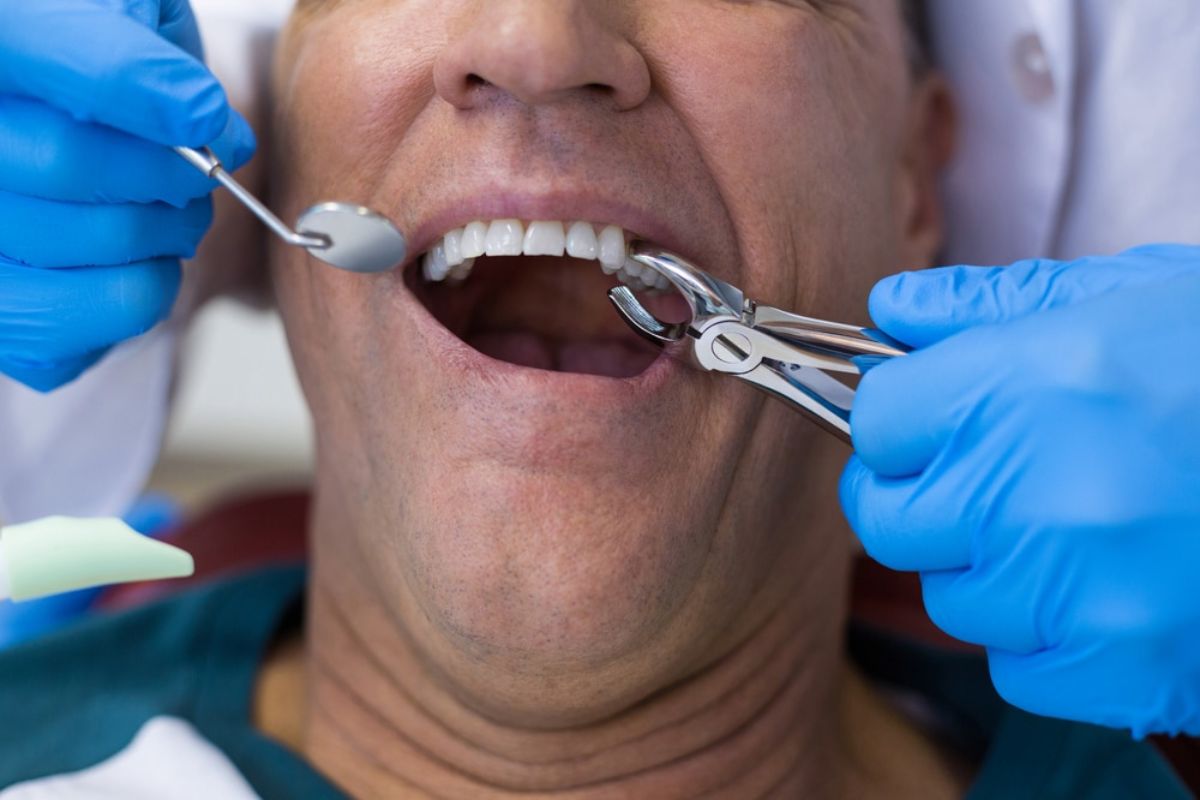



Yes, some bleeding after a tooth extraction is normal. The area may ooze blood for several hours, particularly during the first part of the day after the procedure. What matters is how much you are bleeding and whether the bleeding gradually slows.
Your dentist will usually place gauze over the extraction site to help a blood clot form. That clot protects the underlying bone and tissue while the area begins to heal. Taking care of it during the first few days can make a significant difference in your recovery.
Why Does Bleeding Happen After an Extraction?
Removing a tooth leaves a small opening in the gum where the tooth was located. Blood naturally reaches the area as your body begins the healing process.
A blood clot eventually forms inside the socket. This clot acts like a natural protective covering over the extraction site and supports the early stages of healing.
You may notice blood mixed with saliva after the procedure. Because saliva can make a small amount of blood look like more than it actually is, mild pink or reddish saliva does not necessarily mean that something is wrong.
The bleeding should become lighter as the hours pass.
How Long Should Bleeding Last?
Most people experience the most noticeable bleeding during the first few hours. Gentle pressure from gauze usually helps control it.
A small amount of oozing may continue into the first day. Some people may also notice slight blood staining on their pillow or saliva when they wake up.
Heavy bleeding that continues despite firm pressure is different. If blood keeps flowing rather than gradually slowing, contact your dentist for guidance.
Your recovery can also vary depending on the type of extraction, the location of the tooth, your overall health, and how well the blood clot stays in place.
How Can You Control Bleeding at Home?
Follow the specific instructions your dentist gave you after the extraction. In general, these steps can help:
Apply Firm Pressure
Place clean gauze over the extraction site and bite down with steady pressure. Keep it in position for the amount of time your dentist recommends instead of repeatedly removing it to check the area.
Repeatedly disturbing the site can interfere with clot formation.
Keep Your Head Elevated
Rest with your head slightly raised rather than lying completely flat. Elevation can help reduce blood flow to the area and may make oozing easier to manage.
Avoid Forceful Rinsing
Do not vigorously rinse your mouth during the first day unless your dentist specifically tells you to do so. Forceful rinsing can loosen the developing clot.
Skip Straws
Suction from drinking through a straw can disturb the clot. For the same reason, avoid activities that create strong suction inside the mouth.
Choose Soft Foods
Soft, cool foods are generally easier to manage immediately after an extraction. Avoid chewing directly over the extraction site and stay away from very hot foods or drinks while the area is actively bleeding.
What Can Cause Bleeding to Start Again?
Bleeding can sometimes return after it appears to have stopped. This does not always mean a serious problem has developed.
Eating hard or crunchy foods, rinsing forcefully, exercising heavily, smoking, or repeatedly touching the extraction site can disturb the healing area.
Some medications and health conditions can also affect bleeding. Tell your dentist about the medicines and supplements you take before an extraction so they can give you appropriate instructions.
If bleeding becomes heavier after it had been improving, stop activities that may have disturbed the site and apply gentle, steady pressure with gauze. If the bleeding does not settle, contact your dental provider.
When Is Bleeding After an Extraction a Concern?
Call your dentist if you experience bleeding that remains heavy or does not improve after applying firm pressure as instructed.
You should also seek professional advice if you develop:
- Increasing pain after initially feeling better
- Significant swelling
- Fever
- Pus or unusual drainage
- A persistent bad taste or odor
- Difficulty swallowing or breathing
- Bleeding that repeatedly starts again and becomes difficult to control
Severe bleeding or symptoms affecting breathing or swallowing require urgent medical attention.
What Is a Dry Socket?
A dry socket can develop when the blood clot becomes dislodged or breaks down too early. Without the clot, the bone and nerves underneath can become exposed.
Instead of improving over time, pain may become noticeably worse a few days after the extraction. The discomfort can sometimes spread toward the ear, temple, or jaw.
Following your post extraction instructions carefully can reduce the chance of disturbing the clot. If you develop worsening pain several days after the procedure, contact your dentist rather than trying to manage it on your own.
What Should You Avoid After an Extraction?
The first day is particularly important because the blood clot is still developing.
Avoid smoking and vaping, drinking through a straw, vigorous rinsing, spitting forcefully, and strenuous physical activity unless your dentist gives you different instructions.
You should also avoid poking the extraction site with your tongue or fingers. It can be tempting to check the area repeatedly, but leaving it alone gives the tissue a better opportunity to heal.
Keep following your dentist’s instructions about brushing, rinsing, eating, and medications.
Frequently Asked Questions
1. Is a little blood in my saliva normal after an extraction?
Yes. Mild oozing and slightly blood tinged saliva can occur during the first day. The amount should gradually decrease rather than become heavier.
2. Should I sleep with gauze in my mouth?
Do not sleep with gauze in your mouth unless your dental provider specifically instructs you to do so. Ask your dentist if you are unsure how to manage bleeding before going to bed.
3. Can I brush my teeth after an extraction?
You can usually continue brushing the rest of your teeth, but take care around the extraction area. Avoid directly disturbing the socket during the early healing period and follow your dentist’s specific instructions.
4. What if the extraction site starts bleeding again?
Stop strenuous activity and place clean gauze over the area. Apply steady pressure as directed by your dentist. If the bleeding remains heavy or does not improve, contact your dental provider.
5. How do I know if something is wrong after an extraction?
Bleeding that becomes heavy, severe worsening pain, significant swelling, fever, or difficulty swallowing or breathing can signal a complication. Contact your dentist promptly if you experience these symptoms.
Give Your Recovery the Attention It Deserves
If bleeding seems heavier than expected, continues longer than it should, or you simply feel that your extraction site is not healing normally, it is worth having it checked rather than guessing. Aspen Hill General and Cosmetic Dentistry can take a closer look and help you understand what is happening. Patients in Silver Spring can reach out when they need guidance after an extraction or have concerns about their recovery.